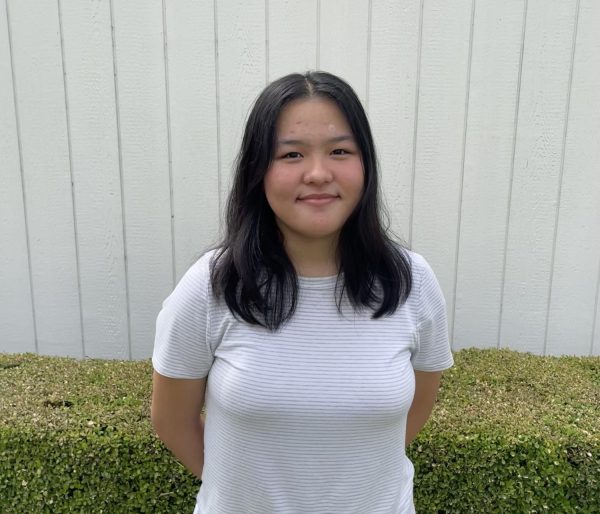

Behind each yearbook is a small group of dedicated students who ensure that memories are carefully recorded year after year. Yearbook editors discuss what happens behind the scenes.
Christopher Morales (12) is a copy editor who, in his words, “enhances the storytelling of the yearbook.” Despite his role in yearbook, Morales clarifies the distinction between editors and regular staffers.
“[As an editor we] get an in-depth insight into how the theme of the yearbook’s going to look like. [But] editors [are] just like staffers. We have deadlines to make, we go through [the] stress [of] getting people to interview, all that stuff. As editors, we make sure everyone else falls in line with the theme of the yearbook. We want to help everybody out [so that] they know what they’re doing,” Morales said.
Editor-in-Chief Keena Weigel (12) oversees and maintains communication among staffers, editors, and advisors.
“[Yearbook] is incredibly time-consuming, not in a bad way, but it takes a lot of work to hand-place [everything]. Every font [and its] size, every spacing between each letter, is extremely well thought out. It takes hard work. One template will take me four or five hours, [but] we [really] need six or seven. People don’t know that there is intentionality behind what we do, and everything is purposeful,” Weigel said.
Ethan Bui (11) is a copy editor, and like Morales, he proofreads, critiques, and edits all draft copy (bodies of text) for spelling, grammar, and journalistic style. Having been in yearbook since freshman year, Bui has become aware of misconceptions about the class and wants to clear them up.
“People [think] that yearbook is a free period, that we do nothing [and] sit around. [In reality], it’s the exact opposite. We do so much, we literally make a 300-page book for the school. It’s student-run [so] we make the pages, we make the writing, we take the photos, we do so much more than [what] people expect us to be doing,” Bui said.
Mandy Guan (11) is a photography editor, responsible for supervising all photography for the yearbook. Guan highlights how, although yearbook doesn’t have traditional homework assignments or a typical classroom environment, it’s just as demanding as any rigorous curriculum.
“Yearbook isn’t an easy class. There are always deadlines to meet, and there is so much work to prepare for the book. People receive their books at the end of the year, [but] planning starts early. For the 2025-2026 yearbook, [we’ve] been planning it since the end of the 2024-2025 school year [and] modified it throughout this school year. There is so much going on to meet the deadlines on time, with a good product,” Guan said.
Eliana Villatoro (12) is a design editor who plans the visuals for the yearbook. As editor, Villatoro enjoys helping staffers understand what’s expected of them.
“I love [being an editor] so much because people come to me for help. I like guiding people. I think it makes the book better and [helps] make a good environment for people to enjoy doing yearbook so that they’re not always super stressed out and embarrassed to ask questions,” Villatoro said.
Tania Osuna-Rocha (12) works as a coverage editor, ensuring all students are fairly featured throughout the yearbook. Osuna-Rocha shared the reason why she does yearbook and why her role is so important to her.
“We want to learn more about people, that’s why we do yearbook, or at least that’s why I do yearbook. I want to get to know new people [and] find different stories,” Osuna-Rocha said. “The best part of being editor [is getting] to build stronger connections, and making new friendships. That’s what I love about my job.”